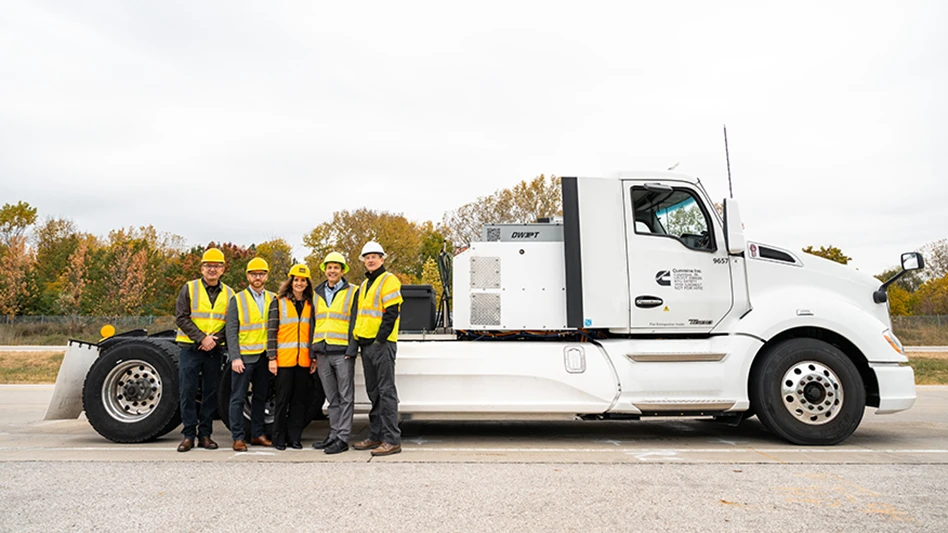
In a potential rollback of an Obama-era emissions rule, President Donald Trump’s Environmental Protection Agency (EPA) has proposed dropping regulations on gliders – large commercial trucks that use new bodies and trailers but older engines and transmissions.
As emissions standards have tightened for commercial trucks, costs for new, cleaner engines have climbed. Truck buyers are responding by choosing gliders, which are
During the Obama administration, the EPA had argued that allowing companies to reuse older, dirtier engines in new truck bodies was a loophole to dodge tighter restrictions, and rules set for January would have forced gliders to meet the same standards as new trucks.
“Current standards for nitrogen oxide (NOX) and particulate matter (PM) (which began in 2007 and took full effect in 2010) are at least 90% lower than the most stringent previously applicable standards, so the NOX and PM emissions of any glider vehicles using pre-2007 engines are at least 10x higher than emissions from equivalent vehicles being produced with brand-new engines. However, most gliders being produced today use engines originally manufactured before 2002,” EPA officials said in a 2016 filing justifying treating the rebuilt trucks as new models.
In that analysis, EPA scientists estimated that 70 to 160 people would die prematurely for every 1,000 gliders allowed on the road after 2017, mostly from respiratory diseases.
In a regulatory filing on Nov. 9, 2017, EPA Administrator Scott Pruitt recommended reversing that decision, saying rebuilt trucks are not new vehicles and shouldn’t be treated as such.
“EPA now believes that, in defining ‘new motor vehicle,’ Congress did not intend that a vehicle comprised of a new outer shell conjoined to a previously owned powertrain should be treated as a ‘new’ vehicle, based solely on the fact that the vehicle may have been assigned a new title following assembly,” EPA regulators said in the filing.
The more recent filing did not include a mortality projection.
Regulators are set to hold a hearing on the matter on Dec. 4, 2017. Official comments will be accepted through Jan. 5, 2018. www.epa.gov
Latest from EV Design & Manufacturing
- Ford partners with Renault Group to expand European electric vehicle presence
- Analysis, trends, and forecasts for the future of additive manufacturing
- BlueForge Alliance Webinar Series Part III: Integrate Nationally, Catalyze Locally
- Wolfspeed’s silicon carbide components to power Toyota’s onboard EV charger systems
- Sunnen enhances e-commerce platform for precision honing equipment
- QuantumScape moves forward with automated battery cell pilot production line
- Dürr introduces next-generation low-pressure spray gun
- #56 Lunch + Learn Podcast with Techman Robot + AMET Inc.