
Formula E second-generation cars
The ongoing electric racecar series kicked off with new, longer-range vehicles for the 2018/2019 season.
No car swapping
Doubling the size of the batteries means drivers can finish races on a single charge instead of swapping vehicles mid-race as they did during the first four seasons of Formula E.
Spark Racing Technology
designed Gen. 1 and Gen. 2 vehicles under the direction of the Federation Internationale de L’Automobile (FIA).
https://www.sparkracingtechnology.com
22 cars
12 races
174mph top speed (up 24% from Gen. 1 vehicles)
| Gen 1. Formula E | Gen 2. Formula E | |
| Max. power output | 200kW (268hp) | 250kW (335hp) |
| Acceleration 0 to 100kph (0 to 62mph) | 2.8s | 2.8s |
| Max. speed | 225km/h (140mph) | 280km/h (174mph) |
| Battery weight | 320kg (705 lb) | 385kg (849 lb) |
| Battery storage | 28kWh | 54kWh |
| Min. weight (including driver and battery) | 920kg (2,028 lb) | 900kg (1,984 lb) |
| Length | 5,000mm (16ft, 5") | 5,160mm (16ft, 11") |
| Width | 1,780mm (5ft, 10") | 1,770mm (5ft, 10") |
| Height | 1,050mm (3ft, 5") | 1,050mm (3ft, 5") |
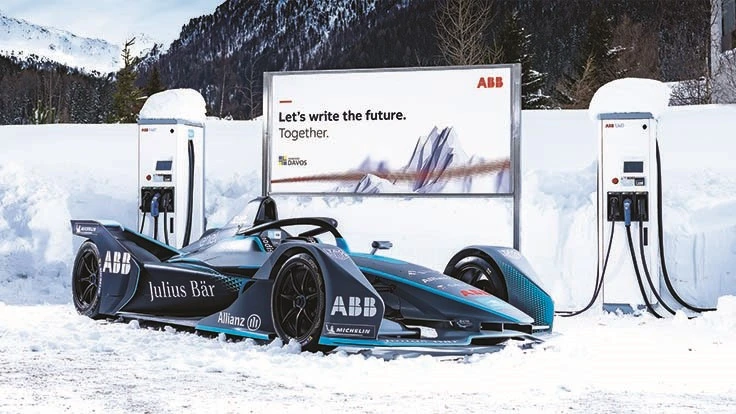
Photo: Formula E racing circuit sponsor ABB (https://new.abb.com) showed off the second-generation racecar at the World Economic Forum 2019 in Davos, Switzerland, in January.
(Photo by Andreas Butz courtesy of ABB)
Latest from EV Design & Manufacturing
- Powering homes with EV batteries could cut emissions, save thousands of dollars
- Meviy introduces stainless steel passivation option for CNC, sheet metal parts
- December Lunch + Learn webinar with Fagor Automation
- December Lunch + Learn webinar with LANG Technik + Metalcraft Automation Group
- EVIO makes public debut with hybrid-electric aircraft
- Redesigned pilot step drill triples performance
- Green Energy Origin expands battery electrolyte manufacturing in North America, Europe
- What’s next for the design and manufacturing industry in 2026?