CREDIT: ALLOTROPE ENERGY
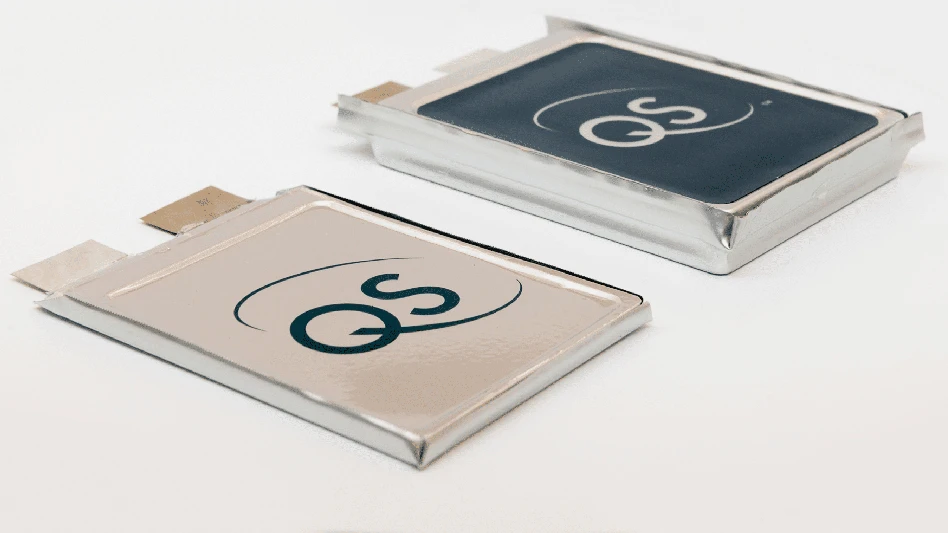
Allotrope Energy has developed an entirely new class of supercapacitors with twice the energy density of existing solutions. Their use could replace traditional lithium-ion batteries in hybrid applications to create powertrains that recover far more energy and provide greater motive assistance, yet at a substantially reduced cost and with easier integration.
Supercapacitors are able to store and release energy much more readily than lithium-ion batteries, making them ideal as an energy store for regenerative braking systems in hybrid-electric vehicles. However, their relatively low energy density to date has forced automotive manufacturers to rely on more conventional battery technology, which is less able to recover all the energy available during deceleration and introduces compromises regarding thermal management and safety.
Allotrope’s breakthrough comes from the use of Lignavolt, a sustainably produced nano-porous carbon with a large surface area. Typical electric double-layer capacitors (EDLCs) have an energy density of around 7-8Wh/kg. Allotrope’s supercapacitors have a density approaching 14-15Wh/kg, meaning they offer double the performance for half the weight, half the size, and at a fraction of the cost.
“Harvesting all of the energy available during six seconds of braking would require a lithium-ion battery the size and weight of a filing cabinet, at a cost of around £1,500,” explains Dr. Peter Wilson, Allotrope Energy’s CTO. “A Lignavolt-based supercapacitor to do the same job would weigh only 3kg, be the size of a shoebox, and cost about £80. We’ve not just broken through the glass ceiling that has prevented the industry from adopting this clearly superior technology, we’ve smashed it.
“Conventional batteries just can’t handle the speed with which the energy comes at them during kinetic recovery, and that means much of it is lost. With a supercapacitor, all of that energy can be harvested in an instant. Equally, that energy can also be discharged extremely quickly, and that opens the door to more powerful electric motors that provide greater assistance.”
As an example, a 1kg high-powered lithium-ion battery might be able to flash discharge at about 1kW, whereas a Lignavolt supercapacitor of the same size could deliver around 50kW. That allows much more of a powertrain’s acceleration to come from the electric motor, which in turn can then be matched to a smaller, lighter combustion engine, introducing even further fuel and emissions savings. In fact, doubling the power of an average ICE-powered family SUV would require a supercapacitor that weighed no more than 4kg.
There are further benefits, too. Supercapacitors are almost completely temperature immune, meaning they can operate at peak efficiency in all climates without the need for complex thermal management systems such as pre-heating and cooling circuits. Meanwhile, the long lifespan of EDLC technology – typically measured in millions of cycles, many orders of magnitude more than any battery – ensures incredible longevity with no degradation of performance throughout the vehicle’s life.
In addition, their manufacture requires no materials of concern such as rare earths, while the use of Lignavolt – itself made from a byproduct of the paper industry – contributes to the global ambition for more sustainable energy solutions.
Latest from EV Design & Manufacturing
- Powering homes with EV batteries could cut emissions, save thousands of dollars
- Meviy introduces stainless steel passivation option for CNC, sheet metal parts
- December Lunch + Learn webinar with Fagor Automation
- December Lunch + Learn webinar with LANG Technik + Metalcraft Automation Group
- EVIO makes public debut with hybrid-electric aircraft
- Redesigned pilot step drill triples performance
- Green Energy Origin expands battery electrolyte manufacturing in North America, Europe
- What’s next for the design and manufacturing industry in 2026?