CREDIT: DGEO
Safety is a big concern for many potential electric vehicle (EV) buyers, and the lithium-ion batteries powering them need to be treated with care. Every battery and EV manufacturer needs to be aware of the regulations surrounding the shipment of lithium-ion batteries, which are considered dangerous goods (DG) and subject to stringent safety standards.

“From a regulatory standpoint, not every battery is equal,” says Mike Cicalo, director of EV strategy for DG solutions company DGeo. “Any battery over 300Wh is classified and regulated as a Class 9 part in the DG world, so to ship them, shippers have to make sure they're adhering to the regulations so they don't get fines or worse, get shut down.”
Class 9 is the miscellaneous category of hazardous materials (hazmat) as classified by the U.S. Department of Transportation’s Federal Motor Carrier Safety Administration. As EV batteries are anywhere from about 50kWh to as much as 200kWh, they firmly land in that category.
DGeo was formed in 2024 as a unique dangerous goods solutions division at Labelmaster, a 50+ year old company with expertise in hazmat and DG shipping, compliance, and training, that’s also known for its high quality label and placard products.
The DGeo division was created to help customers implement customizable end-to-end DG supply chain solutions, specifically related to packaging, warehousing, and logistics, as well as hazmat software technology and DG consulting. Cicalo was brought on to develop a warehousing and logistics arm with a particular focus on batteries and DG parts management.
One ongoing project for DGeo is receiving battery parts from its OEM customers, which they crate, warehouse, and distribute to dealer customers. That part, says Cicalo, is pretty straightforward as long as regulations are taken into account. It’s at the other end of the value chain – when a battery needs to be returned – that things get a bit more complex.
Training and troubleshooting
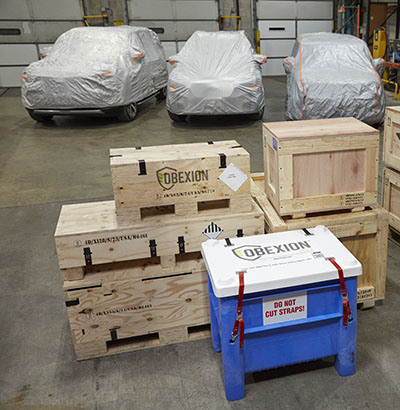
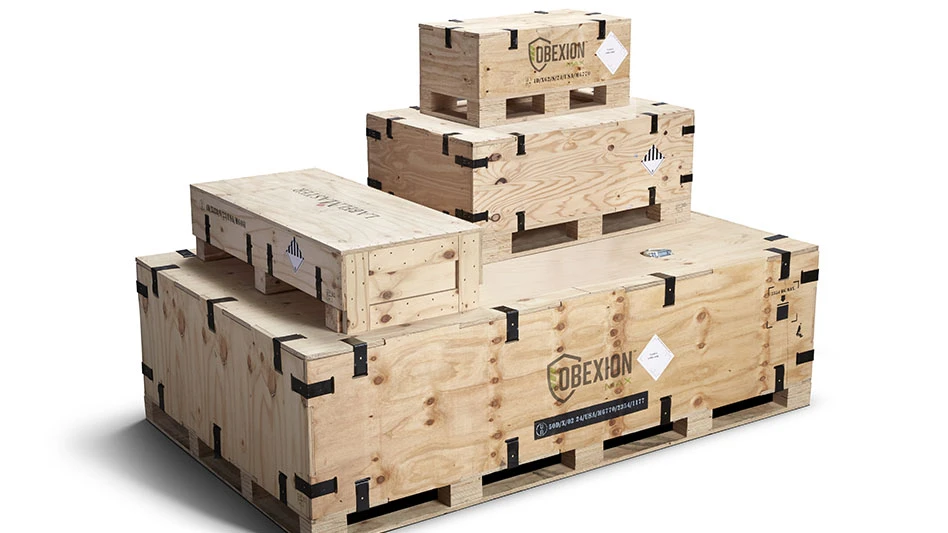
Damaged, defective, or recalled (DDR) batteries must be treated with the utmost caution, requiring special packaging material. DGeo plans ahead for any DDR situations, equipping all its battery packaging to those standards so if anything goes wrong, a customer can ship the battery right back for recycling or refurbishment centers in the same package they received it in. Each shipping crate is prepared and tested with fire-retardant foams, liquid-absorbing blankets, polybags, and other safety features.
“All of our crates and containers we design and build for our customers truly meet DDR requirements and are tested rigorously,” Cicalo says. “Without having those pieces all put together, customers could run into several obstacles as they go through that process, and the time frame to create a [new, DDR-compliant] crate could take days or weeks depending on how it tests and how big the batteries are. These batteries we're shipping today are anywhere from 1,500 lb up to 3,500 lb per battery.”
According to Cicalo, many companies lack sufficient understanding of regulatory requirements for battery distribution. That lack of understanding is a significant challenge facing the battery supply chain, and DGeo is working to address it by offering training in addition to managing the full distribution network for clients. The latter can be the easier way to go, as the DGeo team are experts with combined 60+ years of dangerous goods experience, which offers their clients easy peace of mind solutions. Training for customers is very important – in fact, it’s required for anyone who interacts with DG parts, whether they’re working in the warehouse or transporting over the road.
“On an average automobile, there are about 20 hazmat parts in each vehicle that people don't always comprehend or understand,” Cicalo says. “And that's just on an ICE (internal combustion engines), that's not even an EV.”
Common mistakes many EV battery companies need to address include improper packaging due to lack of understanding, as well as not having a process in place to identify damaged parts. Employees, even at dealerships, must be trained to review batteries and ensure they’re safe to move through the logistics network – particularly if those batteries are in a DDR state.
Not just any logistics carrier can be used to transport DG, either – another frequent misunderstanding Cicalo sees. Drivers must be hazmat certified and up to date on training allowing them to safely handle the goods they transport and identify packaging issues that could create a safety hazard.
“It's a very unique and complicated scenario and system, as you walk through that process to make sure everybody’s on the same page, that everybody's coordinated,” Cicalo says. “That's one of the things that’s unique about DGeo – we sit at the top of the pyramid and have partnerships to make sure that everybody along the supply chain understands their role.”
Partnering for peace of mind
Every customer has a unique supply chain and way of doing things, so DGeo doesn’t take a one-size-fits-all approach – it instead listens carefully to each individual customer and implements solutions according to their needs while simultaneously ensuring compliance.
DGeo wears many hats – in addition to manufacturing, shipping, training, and consulting, the team has also been called to troubleshoot emergency situations where trucks carrying batteries have rolled over, or to review the conditions surrounding battery fires. Working experienced warehousing and logistics partners that fully understand all aspects of DG allows OEMs to ensure all DG parts ship compliantly to avoid such disasters.
Cicalo foresees many changes coming for the battery and EV industry in the near future as the technology continues to rapidly develop. As batteries evolve, so will their packaging, warehousing and logistics needs, so the DGeo team keeps a close eye on these developments to ensure it can continue to offer the expertise needed for manufacturers and suppliers to have peace of mind when it comes to compliance and safety.
Latest from EV Design & Manufacturing
- Powering homes with EV batteries could cut emissions, save thousands of dollars
- Meviy introduces stainless steel passivation option for CNC, sheet metal parts
- December Lunch + Learn webinar with Fagor Automation
- December Lunch + Learn webinar with LANG Technik + Metalcraft Automation Group
- EVIO makes public debut with hybrid-electric aircraft
- Redesigned pilot step drill triples performance
- Green Energy Origin expands battery electrolyte manufacturing in North America, Europe
- What’s next for the design and manufacturing industry in 2026?