AdobeStock | 127108216
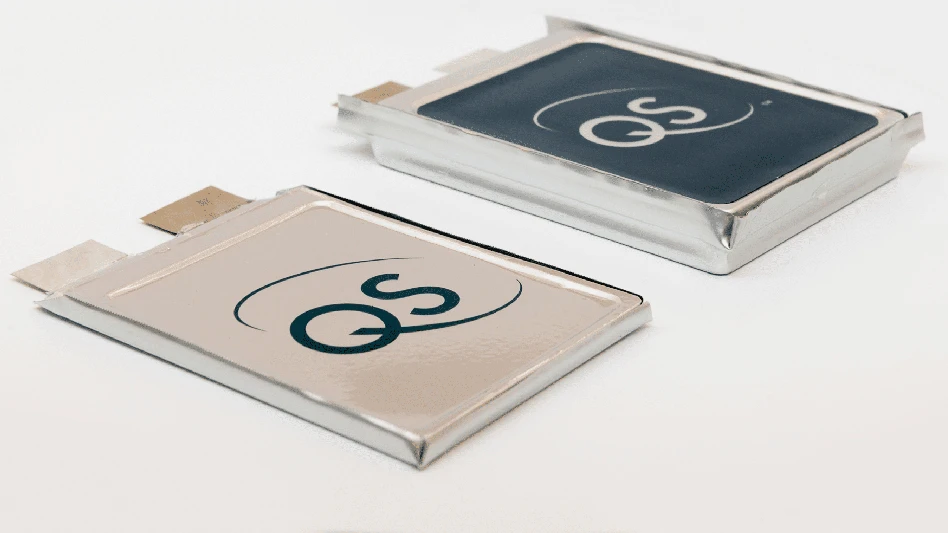
Ford announced a new development in lithium-ion battery technology, in an era when many manufacturers are pivoting away from the material in the quest for solid-state electric vehicle (EV) batteries. According to the company, its Lithium Manganese Rich (LMR) chemistry offers longer range at lower cost than other EV batteries on the market, addressing two main consumer concerns: range anxiety and affordability.
“Our goal is clear: to achieve cost parity with gasoline vehicles and deliver affordable customer solutions tailored to their needs,” says Charles Poon, director, Electrified Propulsion Engineering at Ford. “The introduction of LMR is a key enabler in offering electric vehicles that are both accessible and desirable.”
In the LinkedIn post announcing the technology breakthrough, Poon also highlighted the safety of the LMR chemistry as comparable to that of lithium iron phosphate (LFP) as well as its energy density, which he states is higher than even high-nickel batteries. This energy density is what’s behind LMR’s extended range capabilities.
“This isn't just a lab experiment. We're actively working to scale LMR cell chemistry and integrate them into our future vehicle lineup within this decade,” Poon continues. “The team is already producing our second-gen LMR cells at our pilot line.”
As EV and battery manufacturers race to develop the optimal battery that delivers range, charging speed, safety, and affordability, Ford’s announcement should have many in the industry paying close attention to what the company does next. Last year Ford outlined its renewed focus on EV and hybrid technology, and despite a currently uncertain environment due to governmental efforts to slow EV advances as well as on-again, off-again tariffs, the company appears to be pushing ahead with confidence.
Latest from EV Design & Manufacturing
- Powering homes with EV batteries could cut emissions, save thousands of dollars
- Meviy introduces stainless steel passivation option for CNC, sheet metal parts
- December Lunch + Learn webinar with Fagor Automation
- December Lunch + Learn webinar with LANG Technik + Metalcraft Automation Group
- EVIO makes public debut with hybrid-electric aircraft
- Redesigned pilot step drill triples performance
- Green Energy Origin expands battery electrolyte manufacturing in North America, Europe
- What’s next for the design and manufacturing industry in 2026?