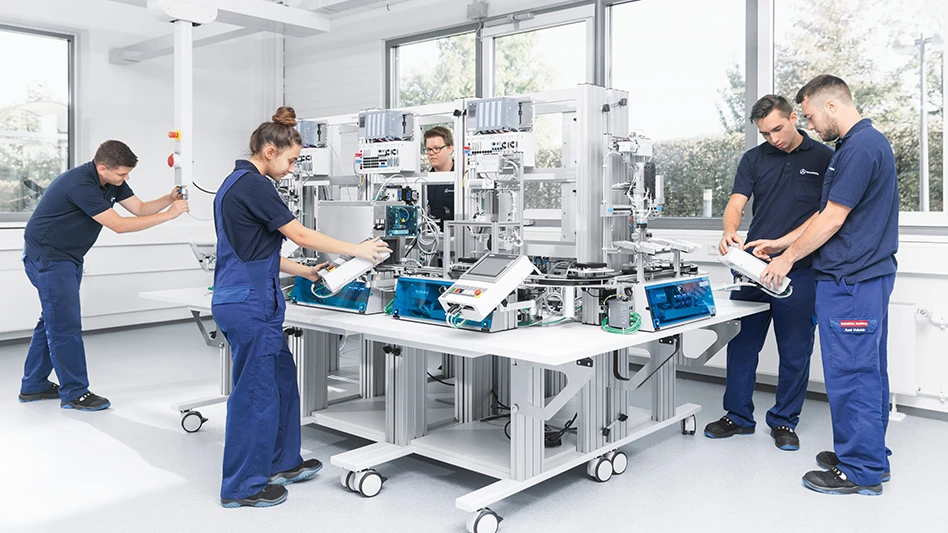
CREDIT: FESTO DIDACTIC
In 2012, the first Manufacturing Day was launched by the National Institute of Standards and Technology’s Manufacturing Extension Partnership (NIST MEP) as a way for manufacturers to connect with the young people who would make up the future workforce. Companies and educational institutions were invited to open their doors to students and educators with events such as facility tours, product expos, career days, and other experiences offering a look at what’s involved in a manufacturing career.
Since then, Manufacturing Day has been celebrated every year on the first Friday of October, with events continuing throughout the month. Now run by the Manufacturing Institute, Manufacturing Day is a vital part of demonstrating to students not only how important manufacturing careers are, but how varied and rewarding they can be as well.
Today, October 3 is Manufacturing Day 2025, with more than 400 events planned across the United States. The manufacturing industry is increasingly recognizing the importance of instilling technical interest and knowledge in students from a young age – and continuing to provide them the education they need to excel in technical careers.
Building basic and specialized technical skills for a well-rounded workforce
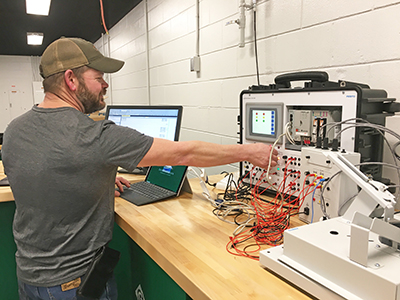
“Technology is changing so quickly that you really need a good foundation,” says Dan Rodriguez, sales director at Festo Didactic North America. A division of industrial automation company Festo Corp., Festo Didactic focuses on technical education, particularly public education from primary schools onward through vocational high schools as well as universities.
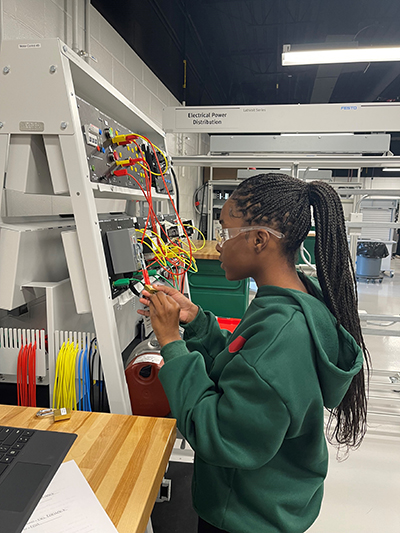
Festo Didactic covers education and training in a wide range of fields including electronics, instrumentation and process control, telecommunications, industrial maintenance, and others, offering broad exposure to the technical field. In addition to addressing foundational skills, the company offers more specialized training for global focus industries such as, for example, automotive. One program involves teaching technicians about electric vehicle (EV) charging systems, a very focused, high-end application – but these technicians need fundamental electronics education before they can move on to a program like that, which is why it’s so important to start building basic technical skills as early as possible.
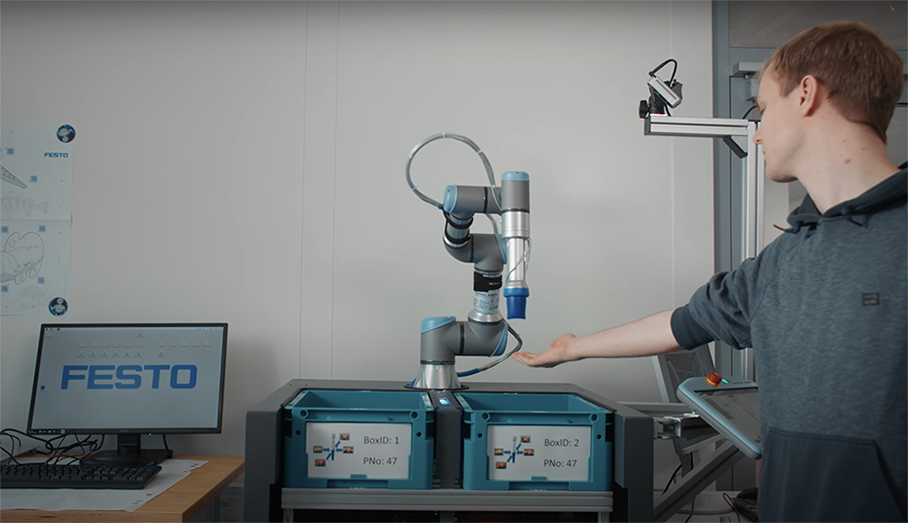
Festo Didactic weaves certain elements into all of its programs, such as artificial intelligence (AI) and automation, which are playing an increasingly important role in just about every industry – from semiconductor manufacturing to fast food. One of the largest, fastest-growing segments Festo Didactic works with is kitchen automation. Many fast food restaurants are starting to automate processes such as flipping burgers and making salads. Rather than taking jobs, however, automation is opening up new opportunities – but only if the training is there.
“It's technically reducing labor costs in or providing labor for a pool that's shrinking, but then it's creating another demand for technical support in that infrastructure,” Rodriguez says. “So you need to train in the fundamentals, electricity, electronics, computer technology, programmable controls technology, mechatronics – certainly the mechanical systems that make up these electromechanical devices we're starting to see. It's raising the complexity of the worker in those fields. When you think of fast food, you think, okay, it's an entry-level, low-skill job. Now it's no longer an entry-level, low-skill job. It's a high-skill job that requires much more training.”
Rodriguez describes AI as a force multiplier making industry more efficient and which should be as standard a requirement for students today as typing skills were a few decades ago. AI goes far beyond ChatGPT and into programs such as predictive maintenance. Festo offers a data analytics program called Festo AX, which can be installed on physical machinery to acquire data from it. Installed on a motor, for example, Festo AX can gather data measuring its temperature and power consumption to predict when it will fail, so it can be repaired before it breaks. Technical experts are required to interpret that data, however – which creates additional potential career paths.
A wealth of potential manufacturing careers
Other advanced technologies including augmented reality and digital twins can be built upon a foundation of basic technical principles. Technology is evolving rapidly, so it’s critical for manufacturing companies as well as educational institutions to stay up to date on the training they offer. Manufacturing companies can benefit from working with school systems and supporting continuing education in colleges, creating a pool of potential incoming workers who are trained and up to date in the latest technology.
Dual education and apprenticeship programs, where students work at a company while simultaneously attending college to learn the skills they need, can also greatly benefit companies – essentially, Rodriguez says, companies are building their own workforce through these programs.
Industrial manufacturing is seeing enormous growth, which means enormous demand for skilled workers. The COVID-19 pandemic revealed major weaknesses in the global supply chain, and since then manufacturers all over the world have been turning toward reshoring to prevent such a crisis from happening again. Festo Didactic has a presence in more than 60 countries, ready to meet the growing need for technical education and training.
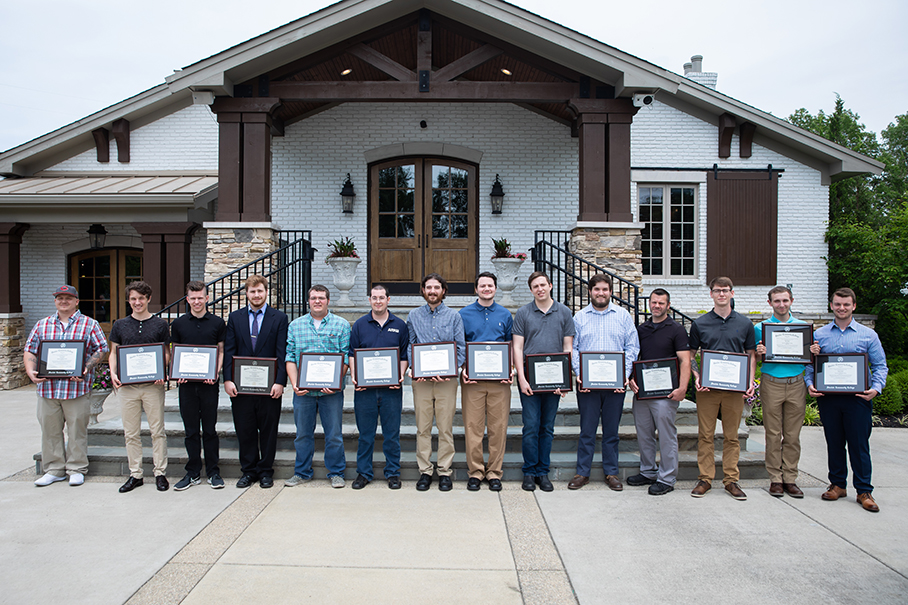
Jobs in many fields are hard to come by right now, but manufacturing isn’t one of them. School systems need to change long-held mindsets and integrate more STEM programming into their curriculum, Rodriguez continues. When children are exposed to something at a young age in an engaging way, they’ll gravitate toward it and remain interested, and they’re more likely to continue to pursue training that can lead to a stable, lucrative career in manufacturing.
“There are some fundamental skills, mechatronic skills, that are in very, very high demand,” Rodriguez says. “So with a good mechatronic degree, you can pretty much work almost anywhere in an industrial space.”
Manufacturing Day, and the Manufacturing Month of October, are great opportunities for companies, educational institutions, and individuals to work together on developing creative ways to get young people interested in technology and manufacturing – and building the workforce of the future.
Latest from EV Design & Manufacturing
- Powering homes with EV batteries could cut emissions, save thousands of dollars
- Meviy introduces stainless steel passivation option for CNC, sheet metal parts
- December Lunch + Learn webinar with Fagor Automation
- December Lunch + Learn webinar with LANG Technik + Metalcraft Automation Group
- EVIO makes public debut with hybrid-electric aircraft
- Redesigned pilot step drill triples performance
- Green Energy Origin expands battery electrolyte manufacturing in North America, Europe
- What’s next for the design and manufacturing industry in 2026?