AdobeStock | 429904613
The global electric vehicle (EV) battery market size was valued at $91.93 billion in 2024 and is expected to reach $251.33 billion by 2035. Tariffs and other economic changes may alter those forecasts, but the projected 9.6% growth rate demonstrates continuing strong demand for EV battery production.
To keep pace with rising demand while controlling costs, EV battery manufacturers need to ramp up production while also maintaining strict quality standards and ensuring sustainability throughout the supply chain.
That’s why many are turning to precision-targeted manufacturing execution systems (MESs) and digital manufacturing platforms (DMPs) to streamline operations, improve quality control, and maintain compliance with ever-evolving industry regulations.
Overcoming key challenges in EV battery production
MES and DMP solutions help manufacturers manage the increasing complexity of the EV battery manufacturing process, which requires precise handling of precious natural resources, as well as rigorous quality control and high levels of traceability to ensure both safety and performance.
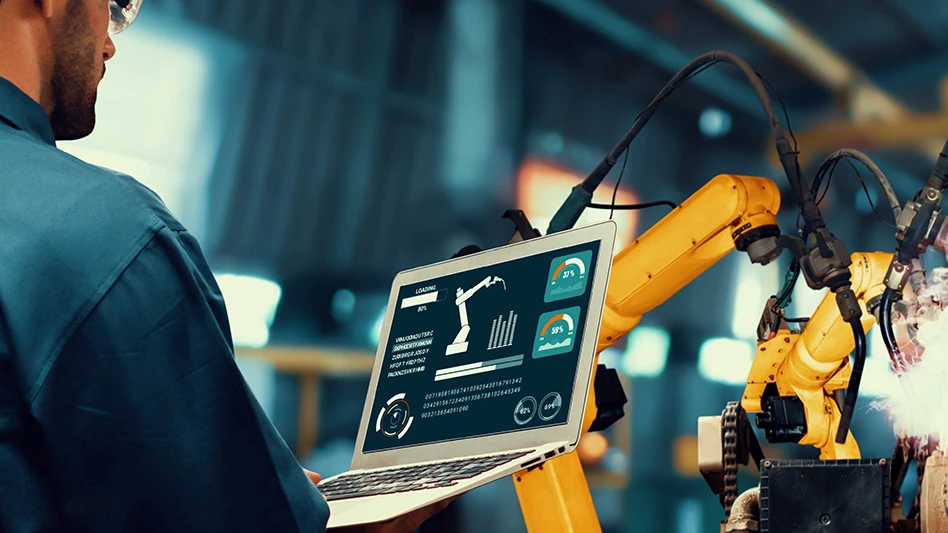
An MES is a software application that monitors, tracks, and controls machines and devices on the shop floor, gathering real-time data to inform decision-making. A DMP, which typically integrates with enterprise resource planning (ERP) systems and other tools, provides a comprehensive view of the entire manufacturing lifecycle, from design through production. Both solutions integrate machine-level data alongside supervisory control and data acquisition (SCADA) and other monitoring systems, providing both manufacturers and factory floor workers with a comprehensive view of operations.
These solutions are helping EV battery manufacturers address three of the biggest challenges in the manufacturing process:
- Material sourcing and sustainability: Sourcing raw materials such as lithium, cobalt, and nickel is an exceptionally complicated and highly regulated process. Once manufacturers obtain the precious resources, they must handle them with care, taking precautions to minimize waste and ensure they are used efficiently.
Integrating a DMP can help manufacturers with sourcing and sustainability by tracking materials throughout the supply chain. With real-time material tracking from procurement to final assembly, manufacturers can optimize procurement processes, identify any production issues early, and ensure compliance with ethical sourcing standards. If excess materials are detected at any stage, the DMP can suggest reallocating it to other production lines.
- Battery performance and safety: Every EV battery has to meet rigorous safety and performance standards, which requires costly processes involving everything from controlling particle contamination to performing thorough quality checks at every stage of manufacturing.
The latest MES solutions can automate many quality assurance processes to detect potential defects early in the production process, reducing the risk of costly recalls and faulty final products. Real-time data from the shop floor also gives manufacturers the insights they need to quickly adjust parameters to maintain quality and minimize risks.
- Workforce training and skill development: As EV battery production scales, manufacturers must address a growing workforce shortage, with fewer skilled workers available to meet rising demand. By 2030, the U.S. battery manufacturing industry will require an estimated additional 310,000 workers, making it crucial to bridge this gap efficiently. This challenge is especially pressing as advanced manufacturing technologies become more integral to production.
By implementing MES and DMP solutions, manufacturers can optimize efficiency and make the most of a limited workforce. These technologies automate repetitive tasks, provide real-time data for smarter, faster decision-making, and detect potential issues before they escalate, ultimately reducing errors and improving overall production outcomes. With MES and DMP solutions taking on repetitive tasks like monitoring and analyzing data, the limited workforce can focus on more strategic roles within EV battery manufacturing, such as refining production processes and ensuring compliance with safety regulations.
Additional benefits of MES and DMP
Along with helping EV battery manufacturers overcome some of their biggest production challenges, MES and DMP solutions provide these three high-level benefits related to optimizing production, improving quality, and driving efficiency across operations: - Rapid deployment and faster ROI: Some of the latest MES and DMP solutions come in low-code, self-service configurations that make it easy for manufacturers to implement quickly. These systems can be deployed seamlessly, without the need for extensive coding or IT support. With these solutions, EV battery manufacturers are able to see productivity and efficiency gains quickly, leading to a faster return on investment and greater flexibility to adapt to changing production demands and emerging technologies.
- Actionable, data-driven insights: MES and DMP solutions provide manufacturers with real-time, data-driven insights that enhance decision-making and optimize production. These systems collect, analyze, and visualize data from across the factory floor, helping manufacturers identify inefficiencies, monitor machine performance, and reduce errors. MES and DMP solutions automate data collection and provide manufacturers with actionable intelligence.
Some MES and DMP solutions go a step further by incorporating digital twin technology, which creates virtual replicas of production environments. These digital twins allow manufacturers to simulate different scenarios, optimize workflows, and predict potential issues before they disrupt operations. For example, a digital twin can model how a change in materials or production speed will impact the output, letting manufacturers test process adjustments in a virtual setting before applying them on the factory floor. This helps manufacturers reduce risk, waste, and inefficiencies.
- Flexibility in manufacturing: MES and DMP solutions provide EV battery manufacturers with configurable workflows and intuitive interfaces that make it easy to introduce new battery chemistries, process modifications, and production adjustments without causing major disruptions to factory operation systems.
Whether scaling up production, integrating additional types of automation, or accommodating custom battery designs, manufacturers can maintain operational efficiency while adapting to the current EV landscape. This level of flexibility is crucial for ensuring long-term competitiveness in a rapidly growing and evolving industry.
The future of EV battery manufacturing
Nobody can precisely predict the future of EV battery production, but regardless of year-to-year fluctuations, manufacturers need to be ready to scale to meet demand – and MES and DMP solutions provide the flexibility to do just that. In addition, these technologies are driving greater efficiency and lower production costs, while also accelerating the transition to a cleaner, electrified future.

About the author: Eric Symon is Head of Smart Manufacturing at Panasonic Connect North America. Eric has held executive positions at market-leading software and professional services companies delivering value through digital transformation to customers in manufacturing, aerospace and defense, and retail industries. Eric holds a B.S. from the Pennsylvania State University.
Latest from EV Design & Manufacturing
- Powering homes with EV batteries could cut emissions, save thousands of dollars
- Meviy introduces stainless steel passivation option for CNC, sheet metal parts
- December Lunch + Learn webinar with Fagor Automation
- December Lunch + Learn webinar with LANG Technik + Metalcraft Automation Group
- EVIO makes public debut with hybrid-electric aircraft
- Redesigned pilot step drill triples performance
- Green Energy Origin expands battery electrolyte manufacturing in North America, Europe
- What’s next for the design and manufacturing industry in 2026?