Sakor Technologies
Automotive, military, aircraft, and space systems have seen a surge of interest in hybrid and electric vehicle (EVs). It’s important to conduct driveline and component testing during design and manufacturing that’s adapted to hybrid and EVs to gain the efficiency benefits and green profile of these vehicles.
Hybrid and electric drivetrains have several features making testing them different from the standard testing conducted on internal combustion (IC) only systems. Hybrid and electric systems use regenerative braking where braking generates power that is returned to and stored in the vehicle’s battery for later use, requiring AC inverter technology and transmissions.
These vehicles have several module control units (MCU’s), small onboard computers, controlling the functions of the engine, transmission, and charging system. The test system needs to communicate with one or more of these units through high-speed in-vehicle networks to properly test components. Changing technology and increased complexity require a testing system very different, and more complex, than those used in IC-only systems.
The technology is out there to ensure proper testing and realization of the energy efficiency benefits promised by hybrid and electric vehicles. The testing technology is energy efficient, reducing operations and maintenance costs, and contributing to the vehicle’s overall environmental performance.
Types of hybrid/EV driveline testing
Hybrid or electric driveline testing is conducted at several stages during the development of a vehicle, and each has an important role to play.
Engineering testing – design engineers need precise measurements
Accurate measurements are critical so design engineers can extract efficiency from their designs, or they will lose the advantage of using hybrid/electric technology. Most vehicles use 3-phase AC motors driven by inverter technology, so power analyzers need to measure 3-phase AC power with a large amount of harmonic content. Test systems are complex and sophisticated with many elements to be tested and coordinated.
In-process, end-of-line testing – manufacturers verify performance and safety
Manufacturing end-of-line testing verifies there are no defects introduced in the manufacturing process and the components will perform to specifications. Typical tests include operational validation, quick performance testing and testing to validate that high-voltage electrical systems are isolated and safe to use in vehicles.
In-process testing conduct tests on partial assemblies along the production line, improving manufacturing efficiency and reducing the chance faulty components get into the finished product.
Quality control testing – motor users look for defects in incoming product
Quality control (QC) testing on components verifies that they perform over the specified range and free of defects. A forklift company may conduct QC testing on a shipment of imported electric motors scheduled to be placed inside their forklifts, using QC testing to verify the shipment coming from their supplier performs as specified and not experience high failure rates in the field. This test is less complex because it doesn’t measure to the degree of accuracy as those tested in engineering systems.
Regenerative braking - basis of improvement in fuel economy
Hybrid or EVs use 4-quadrant motor/inverter technology to assist the hybrid engines or as the prime mover in EVs. Four quadrant means the electric motor controls velocity or torque in either direction − the motor can accelerate, run, and decelerate forward or backward.
During deceleration, the system uses regenerative braking, so the electric motor slows the vehicle and becomes a generator, recapturing the energy of motion and restoring it to the battery. In hybrid systems, when stopping, slowing down, or idling, the engine is shut off and not burning fuel. The electric motor again becomes a generator, recouping energy and storing it back in the battery. The engine is switched back on when needed to keep the vehicle moving or accelerating. The electric motor assists accelerating the vehicle, using the recaptured electrical energy to reduce the load on the engine, reducing fuel consumption.
Using this recaptured power allows the vehicle to go longer between fill ups or charges, improving the fuel economy. The testing program used in designing and manufacturing ensures the powertrain is running efficiently and making the best use of this regenerative power.
Testing systems for hybrid, EVs
Testing hybrid and EVs is different from IC engine testing, which measures speed, torque, temperatures, pressures, and flows. Precise control of speed and torque is not required in testing IC engines so dynamometers used for IC engine testing weren’t designed to handle the precision required by hybrid or electric powertrains and can’t test the regenerative modes of operation.
Modern hybrid/EV test systems provide the functionality of traditional systems to test high-power regenerative electrical drives, high voltage battery and charging systems, and communicating with any number of smart control modules (MCU’s).
Electrical system testing
Larger hybrid/electric drivetrains use higher voltage, efficiency drive systems. Going from the traditional 12/24-volt DC electric system to using 240 volts AC requires one-eighth or less of the current to deliver the same power. This is more efficient and requires much smaller/lighter wiring and smaller components to transfer the energy, leading to smaller, lighter, more energy efficient vehicles. Many current designs operate at 800 volts or more, making the vehicles more efficient.
Use a 4-quadrant motoring dynamometer to conduct this type of testing and simulate/test all modes of operation in a hybrid or EV. Driving or loading in either direction is needed to test a system that operates in this manner. A standard dynamometer is not capable of testing the system during braking when in regenerative mode.
Creation of high-efficiency, AC powered systems involves three-phase, inverter-based technology to control the electric motor. The systems are efficient but generate a great deal of harmonic distortion in the power output so modern hybrid/EV test system includes a three-phase power analyzer, specifically designed to measure high-power electrical values with harmonic distortion present.
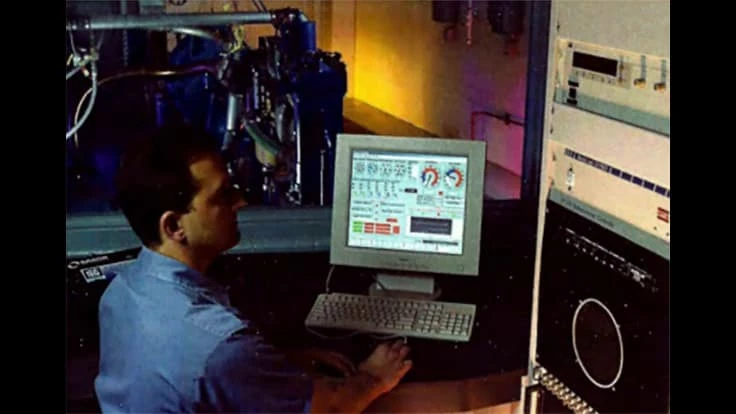
SAKOR developed HybriDyne, a comprehensive test system for determining the performance, efficiency, and durability of hybrid drivetrain systems, including electrical assist (parallel hybrid), diesel electric (serial hybrid), and fully electric vehicle systems.
The HybriDyne integrates SAKOR’s DynoLAB powertrain and electric motor data acquisition and control systems with AccuDyne AC Motoring Dynamometers, and precision power analyzers, the modular HybriDyne tests individual mechanical and electrical components, integrated sub-assemblies, and complete drivetrains with a single system.
High voltage battery simulation, testing
High-voltage battery and charging system is an element of modern hybrid or EVs. You need to provide precise, repeatable high-voltage DC power to accurately test a high voltage hybrid or electric drivetrain. Battery performance changes depending upon their charge state, ambient conditions, and age so they aren’t acceptable for powering the DC components of a hybrid/EV test system. To achieve repeatable results, you need a reliable DC power source. A standard off-the-shelf power supply won’t work, it can’t absorb power from the regenerative system. A standard power supply used with a regenerative system may be damaged or destroyed.
SAKOR developed a solid-state battery simulator/test system to test high-voltage hybrid vehicle batteries and simulate an electric drivetrain environment because of a line-regenerative DC power source.
Absorbed power is regenerated back to the AC mains instead of being dissipated as waste heat during regenerative modes, providing greater power efficiency and reducing operating costs.
The solid-state battery simulator/tester simulates the response of the high-voltage battery in real-world conditions. It provides repeatable results since it is not subject to variable charge. As a battery tester it subjects the battery to the same charge/discharge profile as it’d encounter in a vehicle on the road.
The power absorbed by one unit can be re-circulated back to the other unit within the test system when using an AC dynamometer with a regenerative DC power source, reducing the power drawn from the AC mains by as much as 85% to 90%, and reducing the total cost.
Communication with control modules
Communication with individual control modules (MCU’s) is built into testing systems for hybrid or EVs. The engine was controlled using the throttle and ignition. Now, engines have an engine control unit (ECU) and have a separate MCU controling the electric drive and may have separate units controlling the transmission and/or charging systems. These units communicate commands and data between themselves through high-speed vehicle networks, such as CAN, LIN, and FlexRay.
The test system must communicate with these control units simultaneously. The DynoLAB system was designed to integrate these separate units into a single, coordinated test platform.
Latest from EV Design & Manufacturing
- Powering homes with EV batteries could cut emissions, save thousands of dollars
- Meviy introduces stainless steel passivation option for CNC, sheet metal parts
- December Lunch + Learn webinar with Fagor Automation
- December Lunch + Learn webinar with LANG Technik + Metalcraft Automation Group
- EVIO makes public debut with hybrid-electric aircraft
- Redesigned pilot step drill triples performance
- Green Energy Origin expands battery electrolyte manufacturing in North America, Europe
- What’s next for the design and manufacturing industry in 2026?