The China Automotive Engineering Research Institute (CAERI)
Surveys of the growing Chinese automobile market show consumers and manufacturers are demanding quieter and more comfortable vehicles, a trend gaining more momentum now that electric and hybrid vehicle sales achieve breakthrough growth. By eliminating the noise from combustion engines, electric vehicles create a much quieter environment, however, this also makes noise and vibration from other sources more noticeable, even to the point of causing annoyance. China has made impressive progress with NVH (noise, vibration, and harshness) testing in recent years, and CAERI is one of the key drivers of this successful development.
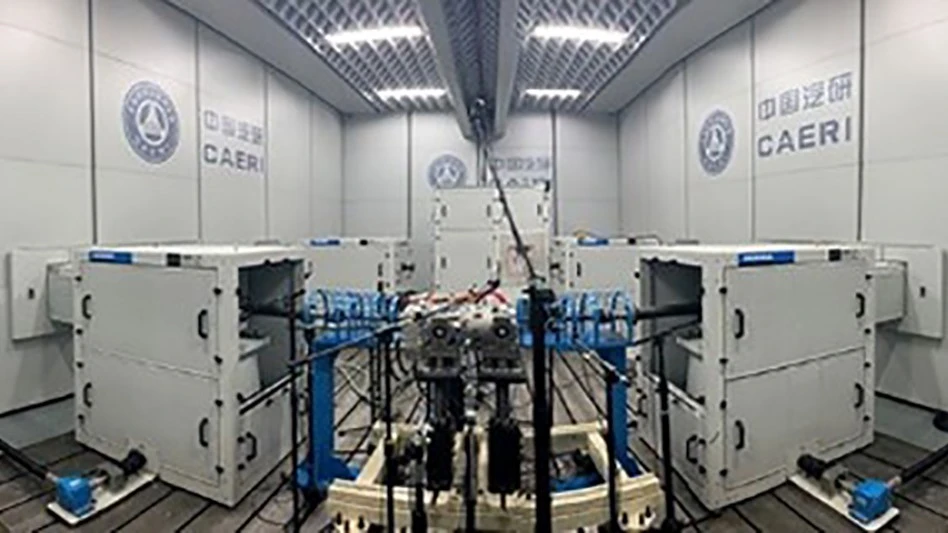
Headquartered in Chongqing, the China Automotive Engineering Research Institute (CAERI) is a publicly listed R&D center that numbers among the technology leaders of China’s automotive industry. Ever since it was founded in the 1960s, CAERI has focused on vehicle R&D, testing, and quality inspection. The institute has developed more than 300 vehicle models, 30 engine types, 80 new materials or processes, and drafting over 300 national industry standards. CAERI’s State Key Laboratory of Vehicle NVH and Safety Center, established in 2010, is China's highest-level NVH research facility for testing, verification, and development of solutions for vehicles, systems, and components covering software and hardware.

Cutting-edge measurement technology drives advanced NVH testing
“With the support of our State Key Laboratory and the Chongqing Research Center of Vehicle NVH Engineering and Technology, we’ve developed new technologies for NVH, fatigue and durability testing in China,” says Dr. Li Peiran, Deputy Director of the CAERI Automotive Engineering Technology Center and Director of the CAERI NVH Technology Center.
Dr. Li has led CAERI’s NVH research for over 10 years. The senior engineer and his team rely on dynamic measurement technology from Kistler.
“We collaborate closely with Kistler to help our customers identify and address technical problems, enabling them to optimize their products,” says Dr. Li Peiran.

What makes NVH engineering so special? And what resources are necessary for success in this field? Among the key factors here are new scenarios created by electric and hybrid vehicles, such as changes in design logic or the use of two different powertrain systems: these have presented NVH test engineers with some major challenges.
“Vehicle NVH testing is much more complicated than most other processes,” explains Wu Yong, an NVH engineer at CAERI who specializes in performance optimization and noise cancelling. “First: the constantly changing state of a vehicle during starting, driving, and braking makes it an unstable and complex system. That’s why huge amounts of data are required to identify the sources and triggers of certain symptoms. And second: source identification is not the end of the process. To determine the transmission medium or receiving ends, we must understand the vehicle’s inner working mechanism and that calls for a great deal of testing, as well as multi-factor analyses.”
Accurately measuring vehicle and powertrain NVH
With the help of accelerometers from Kistler, the NVH engineers at CAERI can attain a new level of NVH optimization. Typical scenarios include steering vibration testing, thermal management system vibration testing, and further analyses at vehicle and component levels. One of the principal products used for NVH testing at CAERI is the 8763B triaxial IEPE accelerometer from Kistler. This ultra-compact, lightweight, and robust cube accelerometer with an edge length of only 10.9mm (0.43in) includes three threaded holes for enhanced efficiency and flexibility during the mounting phase and when selecting the orientation.
For electric powertrain testing, the 8763B is available with multiple measuring ranges (from 50g to 2000g); it features a wide usable frequency response (up to 15 kHz±10%) combined with high immunity to electromagnetic fields. Finally: small vibrations that are typical of electric motors can now be captured even more accurately, because further product refinements have been introduced to significantly reduce the noise threshold compared to the previous version of the product. As an added benefit for CAERI’s NVH engineers, all Kistler sensors can be easily operated with different kinds of data acquisition software, with almost no extra time needed to spend for preparation.
Reliable development partnership fosters innovation

CAERI’s advanced NVH testing facilities equipped with state-of-the-art measurement technology from Kistler enable numerous customers to develop and improve their vehicles including ChangAn Auto, BAIC Motor, Dongfeng Motor, and BYD.
“Over the years, we have contributed several cutting-edge NVH technologies to the industry, and we’ve helped various automakers to develop high-quality vehicles,” says Dr. Li Peiran.
Many of the best-selling models in the Chinese market and beyond would have been impossible without CAERI’s R&D work, and the Institute is sure to continue placing its trust in Kistler technology going forward.
Latest from EV Design & Manufacturing
- Powering homes with EV batteries could cut emissions, save thousands of dollars
- Meviy introduces stainless steel passivation option for CNC, sheet metal parts
- December Lunch + Learn webinar with Fagor Automation
- December Lunch + Learn webinar with LANG Technik + Metalcraft Automation Group
- EVIO makes public debut with hybrid-electric aircraft
- Redesigned pilot step drill triples performance
- Green Energy Origin expands battery electrolyte manufacturing in North America, Europe
- What’s next for the design and manufacturing industry in 2026?