CREDIT: NC CLEAN ENERGY TECHNOLOGY CENTER
The NC Clean Energy Technology Center (NCCETC) released its Q2 2025 edition of The 50 States of Electric Vehicles. The quarterly series provides insights on state regulatory and legislative discussions and actions on electric vehicles (EVs) and charging infrastructure.
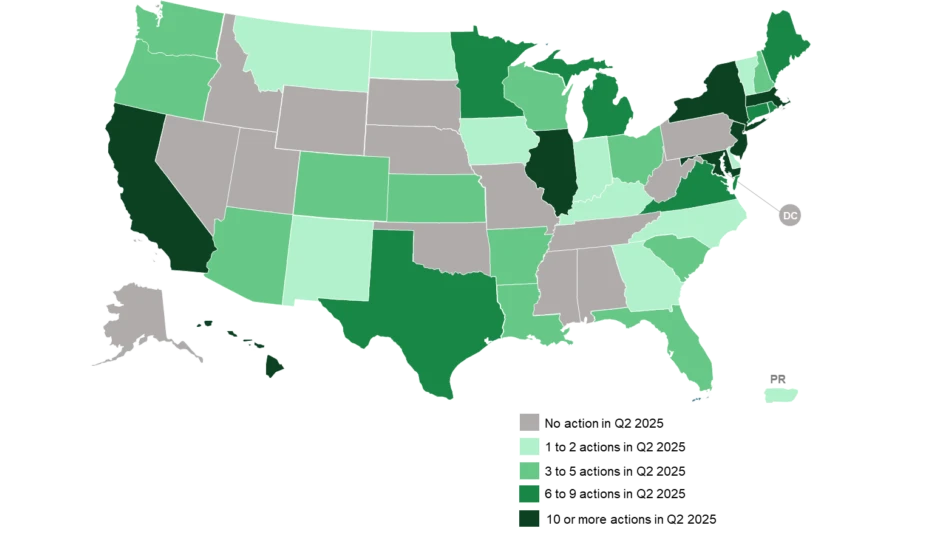
The report finds that 36 states, plus Puerto Rico, took actions related to electric vehicles and charging infrastructure during Q2 2025, with the greatest number of actions relating to rebate and grant programs; rate design for commercial, public, and residential charging; managed charging programs; charging infrastructure planning activities; and registration or charging fees for EVs.
A total of 209 EV actions were taken during Q2 2025, in addition to 336 introduced bills that have not yet passed a legislative chamber. The most active states this quarter were Maryland, California, New York, Massachusetts, New Jersey, Hawaii, Illinois, Connecticut, Virginia, and Minnesota.
The report discusses three trends in electric vehicle actions taken in Q2 2025: (1) policymakers pursuing technical and reliability requirements for charging stations, (2) utilities implementing new make-ready incentives for EV charging, and (3) utilities targeting pilot program extensions.
“As charging stations become more prevalent, a common concern for states is the trustworthiness of chargers for customers to use,” notes Rebekah de la Mora, senior policy analyst at NCCETC. “To that end, policymakers are pursing minimum standards and requirements for chargers to meet, whether they be technical standards, licensing requirements, or reliability baselines.”
The report notes five of the top policy developments of the quarter:
- NEVI funding being unfrozen for fourteen states
- Maryland regulators adopting vehicle-to-grid regulations
- Maryland and Massachusetts delaying implementation of Advanced Clean Cars & Trucks rules
- Connecticut utilities proposing managed charging incentives for multifamily site hosts
- Entergy Louisiana and Pacific Power proposing new residential managed charging programs in Louisiana and Oregon, respectively
“Utilities continued proposing new and interesting programs and rate designs for their customers with electric vehicles,” observes Brian Lips, program manager at NCCETC. “From incentives for make-ready infrastructure, to new and expanded managed charging programs and novel rate designs, utilities are doing what they can to lessen barriers and mitigate the impact of charging on the grid.”
Latest from EV Design & Manufacturing
- Powering homes with EV batteries could cut emissions, save thousands of dollars
- Meviy introduces stainless steel passivation option for CNC, sheet metal parts
- December Lunch + Learn webinar with Fagor Automation
- December Lunch + Learn webinar with LANG Technik + Metalcraft Automation Group
- EVIO makes public debut with hybrid-electric aircraft
- Redesigned pilot step drill triples performance
- Green Energy Origin expands battery electrolyte manufacturing in North America, Europe
- What’s next for the design and manufacturing industry in 2026?