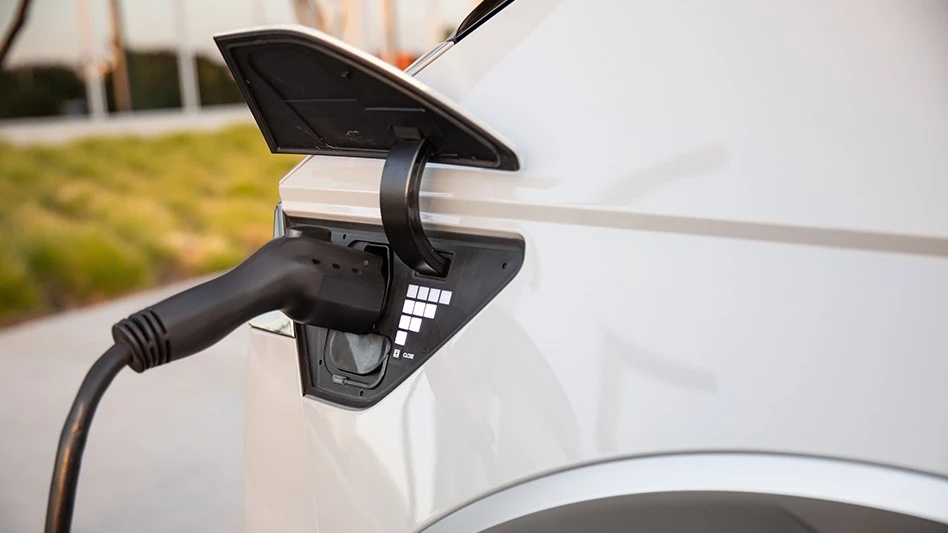
Hyundai Motor Company
Electric vehicles (EVs) are becoming more common as automakers introduce new models designed to appeal to a wider range of consumers. There are crossovers like the Volkswagen ID.4 or full-size trucks like the Ford F-150 Lightning. One thing they all have in common is a battery, most of which use nickel. Here’s the scoop on why nickel is used in EV batteries and what it’s like driving with one in an EV.
Why is nickel used in EV batteries?
Early EVs had very short ranges and made range anxiety an issue. No one wants to run out of juice on the way to work or, worse yet, with a car full of kids in desperate need of a lunch break. Nickel helps make sure that doesn’t happen.
Ni batteries have higher energy density compared to other materials. A lithium-ion (Li-ion) battery using nickel helps increase driving range, so you make it to work on time and the kids get their lunch. Nickel also weighs less and takes up less room so an EV battery using nickel can be smaller leaving more space for cargo and people.
What’s it like driving an EV with a nickel-based battery?
The all-new F-150 Lightning is the electric version of Ford’s best-selling pickup truck, and it uses a nickel-based battery. We had the chance to test the new EV with an extensive on-road drive, a little off-roading, and even a high-speed dirt course. It did all the truck things one would expect and was a blast to drive through the Texas dirt without any performance sacrifice. It shows off impressive acceleration putting other trucks to shame due to its battery and how torque is delivered.
Torque takes time to ramp up in a gas vehicle, but all the torque is available the minute you press the accelerator in an EV. Acceleration is stronger with an EV than it is with a gas engine. We’re talking press you back in your seat and hold on for the ride strong. The Tesla Model Y’s luxury SUV version that uses a nickel-based battery and delivers impressive performance with a 0-60mph time of just 3.5 seconds. It’s practically guaranteed to make you smile. Hyundai’s Ioniq 5 SUV, the 2022 World Car of the Year, delivers strong acceleration that engages the driver. Acceleration in an EV is an experience unlike any other.
What goes where the engine was?
There’s also the bonus of batteries not needing the same space an engine requires. The smaller size of a nickel-based EV battery further helps engineers find more ways to incorporate them into vehicles without sacrificing cargo and passenger room. This includes tucking them low beneath your feet, so they don’t compromise trunk space.
This leaves a huge amount of space under the hood since there’s no engine. The front trunk, or frunk, is small in some vehicles, but when you’re talking trucks it’s a huge space for storing stuff you want safely secured and out of sight. The F-150 Lightning has 14.1ft3 in its frunk. Smaller frunks are found in smaller EVs, but provide extra storage to make day-to-day life easier. We found smaller frunks great for keeping messy stuff, think wet clothes after a day at the beach, separate from everything else you need for the day’s adventure.
What about charging?
While public charging stations are increasing, they still aren’t as easy to find as gas stations. It also takes longer to charge an EV than it does to pump a tank of gas. While range isn’t usually an issue for the number of miles people drive in an average day, it makes a big difference on road trips. This is when a longer-range battery matters. It reduces the times you will need to stop to find a charging station and the amount of time spent waiting for the battery to charge once you find that charging station.
Longer range, less weight, and smaller dimensions make the use of nickel in EV batteries an ideal choice. Automakers see the benefits of nickel and use nickel-based lithium-ion batteries in their vehicles. Volkswagen uses one in its ID.4 with a range of up to 251 miles while the Ford Mustang Mach-E has a range of up to 305 miles per charge.
How is nickel mined?
Currently, nickel mining is conducted in more than 25 countries. There are different types of nickel ores requiring different means of extraction. Numerous companies currently use nickel in their EV batteries including Panasonic and LG Energy Solutions. Though there’s an impact on the environment, Nickel Institute (NI) member companies put a priority on responsible and sustainable production practices adhering to local regulatory requirements.
In addition to seeking sources with as minimal an impact on the environment as possible, there are programs in development to ensure sustainable and responsible practices so battery manufacturers can source nickel with confidence, knowing it’s produced to internationally agreed standards. The Nickel Institute supports the ethical production of nickel and is working in conjunction with organizations that mine copper, lead, and zinc to create a framework of standards for responsible sourcing of all these metals.
What about recycling?
Nickel is a recyclable material that can be used again and again without a loss of quality. The nickel recycled from batteries is often reused and experiences a second life in new batteries, in catalysts or as an alloying element in the stainless-steel industry. And because nickel is valuable, nickel-based EV batteries are recycled more than no-nickel alternatives. Roughly 68% of the nickel currently used in all consumer products is recycled but set to grow as the infrastructure for collection and recycling nickel becomes more robust. The highly recyclable nature of nickel creates a circular economy. Nickel is reused and repurposed indefinitely, which reduces its environmental impact.
The metals in an EV battery, including nickel, contribute to the battery’s overall carbon footprint, but NI member companies are working on its decline. This is due to reducing greenhouse gas emission and continually improve its processes. This on-going effort improves the sustainable nature of nickel and makes its use in EV batteries an environmentally responsible choice as electric vehicles gain in popularity.
Are nickel batteries safe?
Safety is a concern with any vehicle, which is why there is extensive testing by a wide range of agencies and automakers during the development process of every vehicle. EVs are just as thoroughly tested as gas-powered vehicles, but the newness of their technologies raises lots of questions about their safety. It’s something of an unknown for most people, but there’s good news. The lithium-ion batteries in electric vehicles are quite safe.
AutoInsuranceEZ collected data from both the National Transportation Safety Board (NTSB) and Bureau of Transportation Statistics (BTS) to compare the risk of fires in a gas vehicle versus an EV. Since there are more gas vehicles on the road, it compared fires per 100,000 units sold rather than just overall number of fires. Gas vehicles had 1,530 fires per 100K sold while electric vehicles had just 25 fires per 100K sold. That’s a striking difference showing the fear of fires with an EV are unfounded.
The notion that an EV could spontaneously catch fire is a common misconception. The reality is EV fires are often the result of vehicle damage incurred in an accident. The same is true of a gas-powered vehicle, which can catch fire when it’s damaged. Compromises to the charging system can also cause an EV fire, but a properly functioning EV will not spontaneously catch fire.
Local fire departments know how to handle EV fires just as they know how to handle other fires. Extensive outreach on the part of automakers has helped improve their methods and is ongoing. Lithium-ion batteries are a safe technology that is continually being refined and improved to deliver reliable and efficient vehicle operation.
Electric vehicles are still new, occupying only a small percentage of the vehicles on the road today. That’s changing as costs continue to decline and the number of options for consumers increases. The use of nickel in lithium-ion batteries is a safe way to help extend EV range and improve the electric vehicle experience as we move away from fossil fuels towards an electrified future. Whether you want the versatility of a crossover like the Hyundai Ioniq 5, the performance spirit of the Mustang Mach-E, or the capability of the F-150 Lightning pickup, there’s an electric vehicle with a nickel-based battery ready to get the job done. So, if you are thinking of purchasing an EV, make sure to check its battery type!