CREDIT: SILA
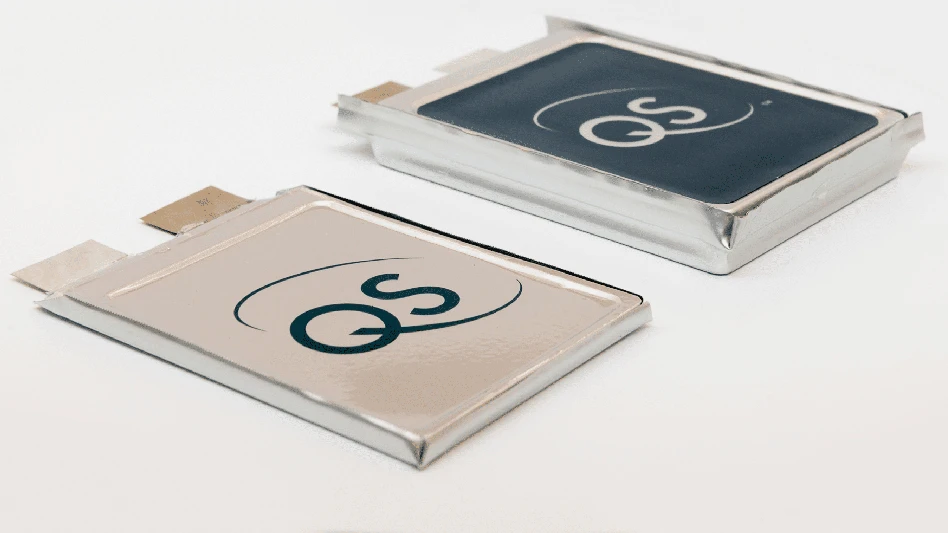
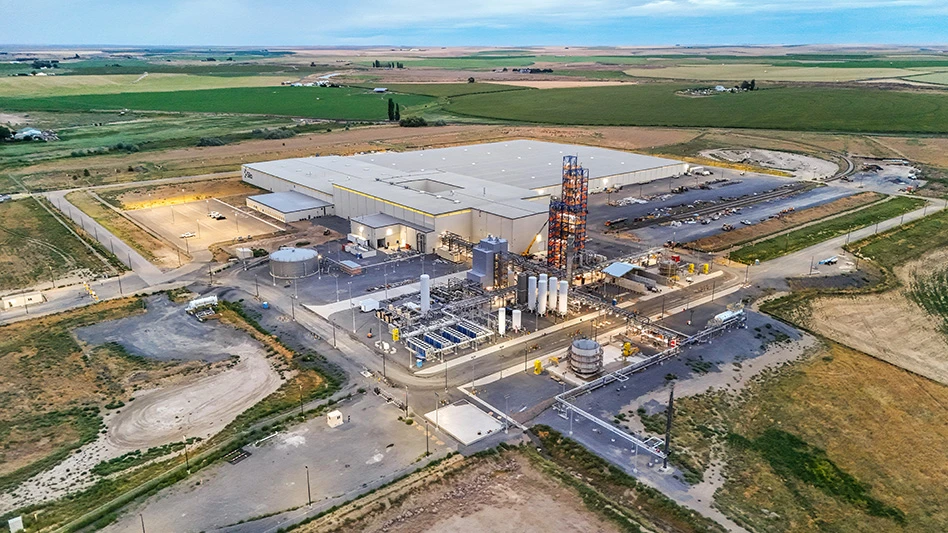
Sila, a next-generation battery materials company, has begun operations at Sila Moses Lake, its new automotive-scale silicon anode plant in Moses Lake, Washington. The team has begun testing and refining process recipes and the plant will soon begin producing initial batches of Titan Silicon, Sila’s breakthrough Si/C silicon anode material for customer applications including electric mobility, consumer electronics, drones, AR/VR, and satellites.
Sila Moses Lake marks a turning point for U.S. energy independence. More than one million times larger than Sila’s first R&D line and spanning more than 600,000ft2 on a 160-acre site, the plant was engineered for scale from day one. Operations will initially support 2GWh to 5GWh of capacity with the capability to expand up to 250GWh within five years and become the largest anode production facility in the world.
By manufacturing domestically at unprecedented scale, Sila is replacing graphite, a critical mineral overwhelmingly sourced from China, with a higher-performing, American-made alternative at a time when U.S. manufacturers are acutely focused on cutting supply chain vulnerabilities. Sila’s Titan Silicon anode is market-proven and backed by a decade of research, delivering exceptional energy density and 2x faster charge with the flexibility to meet the specific performance requirements of any battery-powered application.
“This is not just about building a factory. It is about closing the gap between innovation and manufacturing in America,” says Gene Berdichevsky, CEO and co-founder of Sila. “If we do not execute, innovation will flow to places that can. We have to build here in the United States to create a self-sustaining innovation economy, ensuring that our advancements in next-generation battery technology, like silicon-carbon anodes, are not only conceived but also produced domestically at a global scale.”
Despite a surge in new battery assembly plants, domestic anode material production remains nascent. Sila Moses Lake closes that gap, delivering U.S.-made, high-performance anode technology powered by clean hydropower from the Columbia River. Sila is also investing in the local community and fostering the next generation of deep-tech manufacturing careers by partnering with regional colleges and vocational programs to hire and train up to 500 skilled employees over the next three to five years.
“With the opening of Sila Moses Lake, Washington State is continuing to lead the way in innovation. This facility will create hundreds of good jobs in Moses Lake and help power our transition to electric vehicles with next-generation battery technology, manufactured here in Washington," says Governor Bob Ferguson.
“Central Washington has a rich history in scientific innovation, and I am glad to say that with commercial production just around the corner, Sila will cement its place in that history,” says U.S. Rep. Dan Newhouse, R-Wash, who represents Moses Lake in the U.S. Congress. “This new facility is a prime example of the domestic innovation needed to end our dependency on foreign countries for advanced battery technology and produce high-quality, cutting-edge technologies that protect our supply chains here at home.”
Safety, environmental responsibility, and automotive-grade quality standards are built into every step of production at Moses Lake. Rigorous safety and environmental systems were leveraged during the factory’s design and construction, and process safety controls have been integrated within each tool. Automotive quality systems are in place to ensure consistent, high-quality Titan Silicon is produced and delivered to customers across industries.
Latest from EV Design & Manufacturing
- Powering homes with EV batteries could cut emissions, save thousands of dollars
- Meviy introduces stainless steel passivation option for CNC, sheet metal parts
- December Lunch + Learn webinar with Fagor Automation
- December Lunch + Learn webinar with LANG Technik + Metalcraft Automation Group
- EVIO makes public debut with hybrid-electric aircraft
- Redesigned pilot step drill triples performance
- Green Energy Origin expands battery electrolyte manufacturing in North America, Europe
- What’s next for the design and manufacturing industry in 2026?