Southco
The electric vehicle (EV) automotive segment is undergoing its most rapid expansion phase, with manufacturers across the globe making multibillion-dollar commitments to launch whole lines of vehicles and ultimately retire their internal combustion engine fleets. With this level of growth comes competition, so vehicle designers and engineers are working to elevate the appeal and distinctive value of their vehicle lines. They are developing new amenities and functionality for their vehicles’ interiors and taking steps to make their EVs more secure through a range of electronic access solutions.
As consumers become more discerning about EVs, they have expectations these vehicles will include advanced features and provide for increased comfort and convenience. Satisfying these expectations by creating a “wow” factor about the quality and sophistication of their vehicles is becoming a significant goal for EV manufacturers.
There are key functional areas of EVs, including driver and passenger seats, storage areas like glove boxes, center consoles, dashboard interfaces, and rear passenger areas, offering multiple opportunities for position control and access control hardware to enhance user ergonomics and improve operational safety.
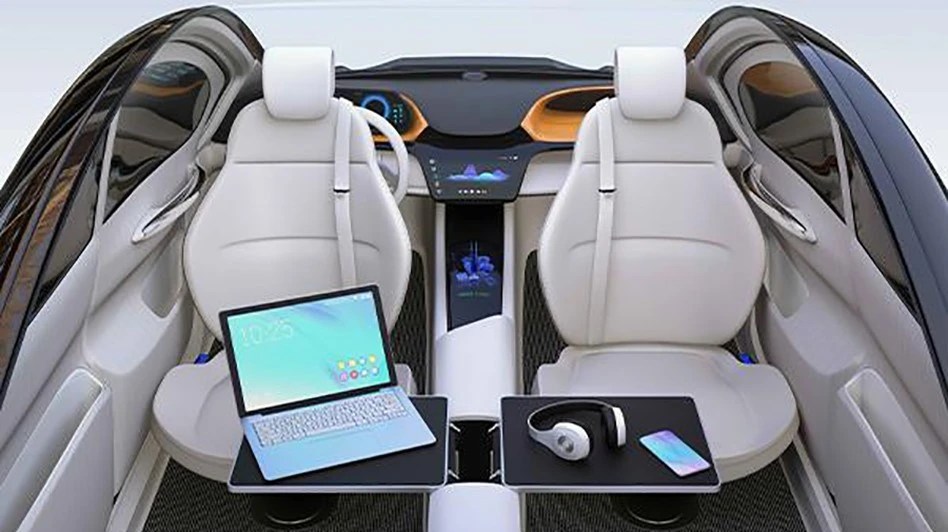
Position control technologies can help make these vehicles better workspaces supported with amenities such as foldable tray tables for tablet and laptop devices, especially as EV manufacturers invest in technologies to support hands-free and autonomous driving capabilities. Other application zones include new designs for center consoles, evolving seating designs with a greater range of comfort features and orientation and support for new features such as expanded or folding touchscreens and windscreen information projectors.
Optimizing the occupant experience
Electric vehicles have an inherent appeal: quiet, emission-free, and sophisticated in engineering and user experience, they’re the future of personal and commercial transport. EV manufacturers are employing new approaches in layout and architecture to many common areas of vehicle interior amenities.
Areas such as the dashboard, center console, glovebox, driver, and passenger seating are zones where new design concepts are being considered. Some vehicle designers are experimenting in making the large center console separating driver and passenger in the front seat removable to provide greater ease of movement within the vehicle, potentially allowing seats to rotate to fully face the rear of the car.
There is increased development of infotainment screens placed in various locations: they could flip out from a tray table like a bulkhead seat on an airplane, be incorporated into a sun visor or pop out from a door panel. There are position control hinges and dual extension monitor mounts available for applications. They feature intuitive and ergonomic positioning of displays and many incorporate hinge technologies keeping the screen in the position the user left it, with no locking clamps or levers required.
Similar technology can be used to provide pop-up tables and screen holders for passengers’ laptops, tablets, and smartphones. Rather than sitting and holding the electronic device throughout the ride, providing simple, elegant amenities, easy to use, hidden when not needed, and featuring hinge technology keeping the device positioned where the user wants it can provide a unique touchpoint experience adding value to the EV and its brand.
There are a range of hinge and position control products providing enhanced touchpoint experiences for drivers and passengers. New cost-effective cartridge hinges well-suited for center console lids are now available. They are engineered to provide a smooth, high-end feel opening and closing of the console. They incorporate positioning hinge technology keeping the lid in the position the person opening it left it in, rather than forcing them to lift it to a full 90o or use their elbow to keep it open while they reach inside to pull out what they need.
These cartridge hinges have smaller dimensions, so they fit cleanly and unobtrusively into tight center console spaces. They have also been developed to work with different panel materials, replacing stamped steel with cast aluminum or injection-molded hinges. Many EV manufacturers are in search of lighter-weight components throughout their vehicles as reducing vehicle weight can help extend battery mileage.
Electrification of interior functions
One ongoing trend in EV interior design is to “electrify” a range of functions and applications zones in the past were purely manual or mechanical. Some EVs have large touchscreen consoles controlling the car’s functions, other than steering and braking. In some vehicles, these screen fold down flat or are hidden inside the dashboard and are displayed when the vehicle is powered by its driver. It’s another example of creating impressive functionality can streamline vehicle interiors.
These “electrified” functions are often included in the very high-end EV models. Similar kinds of fold-down or pop-up functionality can also be provided by high-quality hinges using counterbalance or torque friction hinges to support essentially the same operation, without the added cost, weight, or wiring required to support small electric motors.
Another area where electromechanical actuation is being applied is the glovebox. For convenience and ease of use, some EV manufacturers are replacing the standard manual lift latch with electronically actuated latching, which can be controlled from the EV’s touchscreen control or a button on the glovebox door.
In some designs, the door opens, and the interior of the glovebox moves out for easier access to the contents, this is typically done for the high-end models. EV manufacturers are comfortable using these features, because EVs are essentially one big battery, so powering, wiring, and connecting features to the vehicle’s touchscreen control isn’t complicated or outside of normal design requirements.
Glovebox designs are improved and simplified in other ways, for EVs and standard internal combustion vehicles. One new design uses two-point electronic latching rather than a single center latch or striker that’s hanging down. This removes hang-up points in the middle of the glovebox that can snag clothing or cause other problems.
Instead, latches are installed either in the door or embedded in the instrument panel. This provides a more secure latch having much quieter actuation. While it may seem like a small point, clean, quiet operation of access and position control devices like latches and hinges has a unique appeal for EV design engineers: since electric vehicles operate with much less noise compared to internal combustion vehicles, clunky-sounding latches or other devices can detract from an EV’s overall appeal and impression.
Electronic access systems enhance convenience and security
Most current day vehicles (EV and internal combustion) have body control modules that are essentially the brains of the vehicle and provide electronic control of the vehicle’s systems. EVs have the same vehicle control modules but they are more advanced and have more features and options.
EVs, like other vehicles, have largely replaced mechanical keys with key fobs and electronic access systems (EAS) for vehicle access and security. A recent trend is to provide smartphone apps for the same purpose, allowing remote opening of different doors or trunk spaces, remote startup, and other advanced access control features. The apps can include additional features, such as providing copies of the app to more than one vehicle user but restricting access or only allowing entry to the vehicle while preventing the vehicle from being driven.
Using EAS platforms to control access is also a safety and security feature EV manufacturers have implemented to prevent the vehicle’s owners or other unauthorized people from accessing sensitive battery systems and electric drive components.
There is a major safety concern this restriction addresses: battery packs and e-drives contain high-voltage systems should only be accessed by trained, authorized technicians at a dealership or other EV service facility. To access these systems, EV manufacturers are installing separate EAS mechanisms on the access panels for this equipment, which can only be opened via authorized electronic keys from the manufacturer.
Continually enhancing the EV user experience
Every EV manufacturer is developing their own brand-specific approach to providing the unique qualitative driver and passenger experience they believe will help them be competitive in a fast-changing marketplace. This includes refining the impressions people develop when accessing the vehicle and using all interior features.
Leading suppliers of access and position control devices and systems can help EV manufacturers advance the designs of their vehicles. They offer expert guidance on how new kinds of electronic latching systems or position control products such as detent and counterbalance hinges can provide high-quality functionality, integrate cleanly into interior designs, and provide simple yet effective high-touch contributions to the EV touchpoint experience.