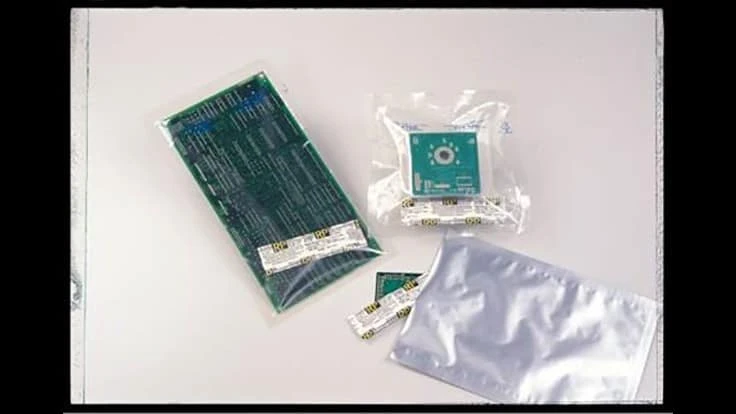
Mitsubishi Gas Chemical America introduce the RP System to protect products from moisture and oxygen damage that can occur during shipping and long-term storage. Manufactured in Japan and introduced for the first time to North America, the RP System is packaging that protects metals from corroding, retains long-term efficacy of agricultural products, while protecting parts from other forms of oxygen- or moisture-based degradation.
The RP System combines protection from both oxygen and moisture and allows parts to be stored for years in pristine condition. The RP System offers manufacturers, suppliers, and OEM’s cost-savings through manufacturing flexibility, product protection, and enhanced brand integrity.
The RP System places items being shipped or stored into a gas barrier bag that withstands oxygen and moisture penetration. A customized RP agent composed of oxygen- and moisture-absorbing compounds is inserted into the bag. An oxygen indicator can also be included, enabling instant verification of oxygen levels. The bag is hermetically sealed to create an environment in which oxygen and moisture are virtually eliminated, in some cases for up to 10 years of storage.
Mitsubishi can customize the specific RP agent required depending on the item being stored. Metals require an agent that incorporates robust moisture "scavengers" to ensure an environment that is moisture-free, whereas paper-based products require a “moisture neutral” environment.
Electronic circuit boards, automotive parts, raw metals, agricultural items, and numerous other industrial products can deteriorate during transport and long-term storage, exacerbated by supply chain logjams affecting global shipping. The RP System keeps products in the same condition from the time of their manufacture, enabling them to be used months or even years in the future without any degradation in quality or performance.
The RP System is designed for long-term preservation, providing manufacturers with cost-savings. Suppliers can store parts for later use, making it possible to stock items and do fewer production runs. This reduces pressure on suppliers with shipping delays and labor shortages. Enabling parts to arrive in mint condition, eliminates time and effort in cleaning or reworking items, resulting in fewer returns, enhancing brand integrity, and overall customer satisfaction.