SABIC
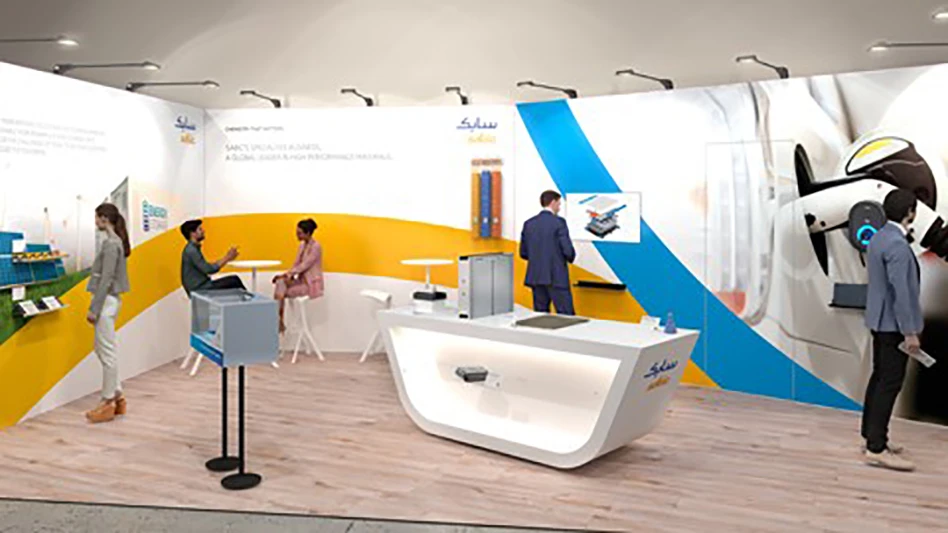
SABIC, a global leader in the chemical industry, highlighted its innovative material solutions well-suited for the electric vehicle supply equipment (EVSE), battery industries at The smarter E Europe 2023. SABIC’s specialty resins, compounds, and copolymers – including bio-based, recycled, and upcycled solutions – can make a meaningful contribution to sustainability, performance enhancements, and new designs for applications across the rapidly expanding sectors. SABIC launched new LNP ELCRES CRX grades providing a combination of flame retardance (FR) and impact and chemical resistance to EVSE components. SABIC’s materials, backed by expert application design, development, and support services, can help customers achieve their goals and build a brighter energy future.
“The smarter E event provides a great opportunity to demonstrate SABIC’s strong commitment to vehicle electrification and energy storage industries in Europe,” says Marco Dalmino, director, Customer Fulfillment, EMEA, SABIC. “Our specialized materials aim to address shortcomings of incumbent solutions, expand design freedom, deliver enhanced properties, and enable the growth and adoption of new energy technologies.”
Material solutions in key energy markets
At The smarter E Europe, SABIC displayed a wide variety of applications that illustrate the benefits of specialty thermoplastics in four critical energy markets: EVSE; batteries, fuel cells and other energy storage systems.
EVSE
A robust charging infrastructure is a key enabler for the wider adoption of electric vehicles. As consumers demand ubiquitous access to public charging stations, improved reliability and faster charging speeds, new materials can help provide greater safety, extended durability, and higher performance. SABIC thermoplastics can deliver excellent resistance to impact, UV light, chemicals, and weather, as well as enhanced electrical and FR properties.
Parts exhibited included:
• EVSE enclosures made with LNP ELCRIN EXL series and new LNP ELCRES CRX compounds, which offer low-temperature ductility, UV stability, improved chemical resistance and non-chlorinated/non-brominated flame retardance
• EV charging connectors molded from LNP ELCRIN EXL series and LNP ELCRES CRX materials, which provide dimensional stability, chemical resistance, and good electrical properties
• Light guides and light indicators using LNP LUX-C series resins, which offer customized transmission rates and diffusion colors
• Displays featuring high ductility and enhanced scratch and chemical resistance, thanks to the properties of LNP ELCRES DMX series and LNP ELCRES SLX series materials
Batteries, fuel cells, and other energy storage systems
Vehicle electrification on a massive scale, together with the continued shift to renewable energy generation, calls for new storage and distribution solutions. A spectrum of batteries, from household to industrial level, will be required. Different battery chemistries will play a role, including conventional lead and lithium as well as hydrogen. SABIC’s specialized materials can help enable new designs, improve energy density and efficiency, and reduce weight.
Components exhibited included:
• Housings and enclosures made with LNP ELCRES CX compound, featuring higher heat, hydrolytic stability, and better chemical resistance vs. standard flame-retardant polycarbonate/acrylonitrile-butadiene-styrene (PC/ABS) blends
• Extruded sheets and profiles made with new LNP ELCRES CRX9016E compound, featuring a combination of flame, impact, and enhanced chemical resistance
• Fuel cell and battery stack components, such as gaskets, bipolar plates, current collectors, and casings, which use ULTEM resins and films and LNP compounds
• Sulfonated polyphenylene ether (sPPE) membranes for potential use as ion-exchanging separators for flow batteries and fuel cells. These membranes are believed to offer high ion conductivity at lower crossovers, along with improved durability.
• Bipolar plates for battery and fuel cell stacks, which can potentially benefit from LNP STAT-KON compounds that deliver light weight and high conductivity
Sustainable solutions
SABIC continues to expand the scope of its sustainable product offering, which includes chemically upcycled materials, compounds containing post-consumer and post-industrial recycled (PCR and PIR) content, and renewable bio-based compounds and resins, many of which are certified under the ISCC PLUS program. These materials can help energy customers reduce their carbon footprint and support circularity.