Placing inspection processes on the shop floor optimizes floor space, provides complex measurements quickly, and maintains high productivity – overcoming time and inspection room capacity challenges
faced in quality control (QC).
“In the past, the inspection process had to be done in a separate QC lab by a quality control professional, which can require longer periods of time to inspect a part,” says Mark Arenal, general manager of Starrett Kinemetric Engineering Inc., a subsidiary of The L.S. Starrett Co. “Walk-up metrology brings the inspection process to the shop floor where a machine operator can quickly walk up to the metrology system and measure the part through a simple and repeatable process.”


Measuring automotive components such as rubber door seals, gaskets, and connecting rods on the shop floor reduces bottlenecks and enhances throughput.
“This type of system is especially critical for the automotive industry because automotive manufacturers cannot afford to lose any time or have holdups in their operations,” Arenal explains. “Walk-up metrology greatly speeds the overall process and offers maximum flexibility.”
Using a walk-up metrology system, such as the Starrett HVR100 Flip, users can place a part on the system and the program optically measures it to determine if it meets specifications. The system, which can be used in a vertical or horizontal orientation, provides automatic part and multiple-parts recognition to measure specific geometric points. Once a part is inspected, the HVR100 will store the part data and auto-recognize the component the next time it is being measured (see sidebar, page 24). For increased productivity, the HVR100-Flip can use robotic automation for parts loading and unloading.
Subjectivity and operator-to-operator variation in using an optical comparator with traditional overlays are replaced by the part CAD (DXF) file. This allows for easy updates, fast changes, and inspection repeatability.
Technological advances of walk-up metrology systems make them more functional and accessible to engineers, tool and die makers, machinists, and maintenance shop employees. When more disciplines of a company understand and use the technology, measurement processes are more efficient. Walk-up metrology’s capabilities also make it a discoverable technology, allowing a part to be reverse engineered by making measurements quickly and easily via a touch screen.

“Walk-Up Metrology solutions are versatile, offering a wide range of uses from engineering and development to reverse engineering, quality, and inspection,” Arenal says. “Companies can experience a rapid payback on this type of metrology system.”
The L.S. Starrett Co.
http://www.starrett.com
Multi-axis motion controller
The CK3M programmable multi-axis controller uses EtherCAT and encoder communication protocols to interface with various encoders and motors, providing high-precision synchronous control and increased machine performance.

With output speeds of 50µs/5 axes, the controller’s high-speed feedback enables precise path control in precision machining. Machine builders can incorporate their own advanced control with its support for ANSI C or an original programming language.
Omron Automation
http://omron247.com
Latest from EV Design & Manufacturing
- Festo Didactic to highlight advanced manufacturing training solutions at ACTE CareerTech VISION 2025
- Multilayer ceramic capacitor enters mass production
- How US electric vehicle battery manufacturers can stay nimble amid uncertainty
- Threading tools line expanded for safety critical applications
- #55 Lunch + Learn Podcast with KINEXON
- Coperion, HPB eye industrial-scale production of solid-state batteries
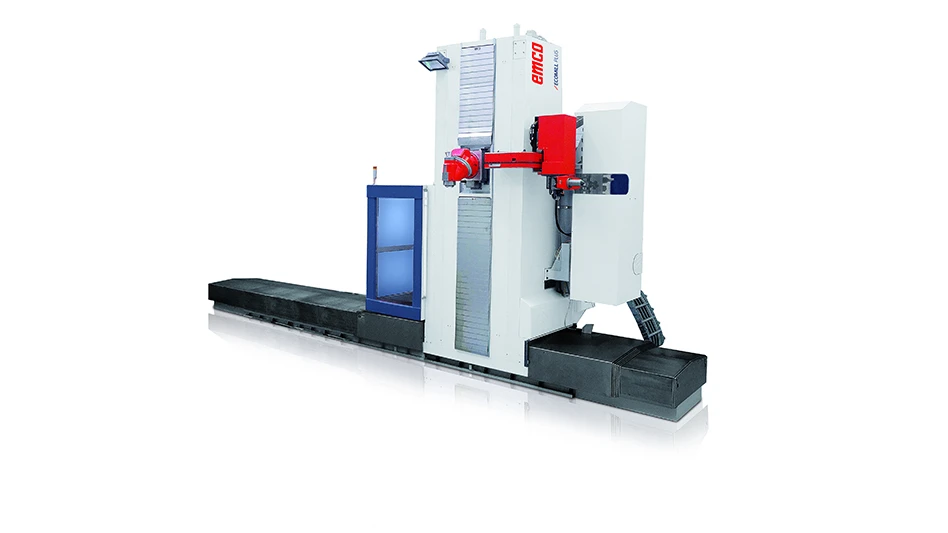
- Machine tool geared toward automotive structural components
- Modular electric drive concept reduces dependence on critical minerals