Ennomotive
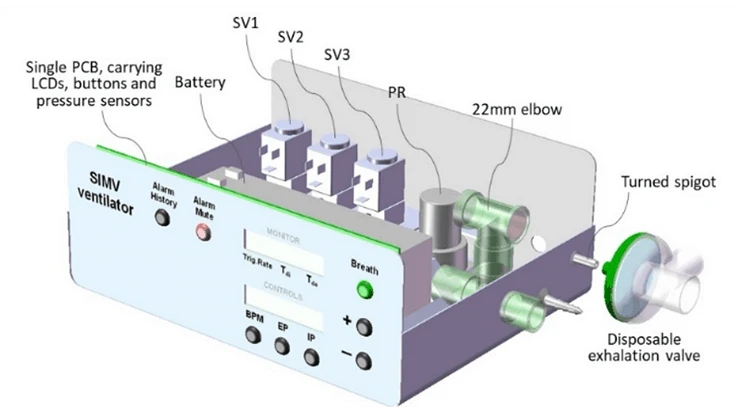
Ennomotive has moved to Round 2 of its non-profit online challenge for the improvement of a ventilation system suitable for hospitals and makeshift wards. The goal is to speed up the availability of ventilators to help patients with coronavirus globally.
Ennomotive kickstarted an international crowdsourcing initiative for the development of simple, effective, scalable, and low-cost ventilators and makes its global community of 20,000 engineers available to face the challenge.
Round 1 of this project was launched on March 18, 2020, and, 3 days later, a UK engineer came up with the specification of a Simple Pressure Control ventilator inspired on 1980’s models, still functional today. Round 2 has recently started, and the goal is to make improvements of any kind to the current solution, like using alternative components (valves, pressure sensors, etc.) whose availability is short these days.
This new online challenge is open worldwide to any engineering professional, company, tech center, maker or scholar from different industries and technical backgrounds that want to propose improvements for this challenge. The final goal is to make a key contribution to the fight against the COVID-19 pandemic.

Participants that join this new challenge may download the open source ventilator specification and submit their ideas before the April 3, 2020. Besides, they can start looking for local manufacturers in their region to scale the production of the ventilator.
Latest from EV Design & Manufacturing
- Festo Didactic to highlight advanced manufacturing training solutions at ACTE CareerTech VISION 2025
- Multilayer ceramic capacitor enters mass production
- How US electric vehicle battery manufacturers can stay nimble amid uncertainty
- Threading tools line expanded for safety critical applications
- #55 Lunch + Learn Podcast with KINEXON
- Coperion, HPB eye industrial-scale production of solid-state batteries
- Machine tool geared toward automotive structural components
- Modular electric drive concept reduces dependence on critical minerals